
Every student expressing misbehavior and defiance has a story! Sadly, this is the truth. Students face more trauma than we realize, and more often they act out in school because it is their only “safe place” or the only place they feel like they can establish some control.
Working through these moments is frustrating. Truthfully speaking, I have been through my fair share of these moments – in these moments I was so frustrated, I actually began to cry. Do you know that feeling? I remember one time feeling like my hands were completely tied because I was not the parent and could not control the follow-through. I could not control any lack of reinforcement at home. I could not control whether or not the child experienced trauma. Yet I still had to spend my days as the teacher dealing with the behavior that arose from the trauma the child had experienced. I was exhausted, I was frustrated, and for a brief moment in time, I was second guessing my position as an educator. It was in this moment, I experienced the most growth – I began to collaborate with colleagues near and far, I began to search for new methods and I began to apply a positive proactive approach to resolving this. I found something that WORKS! I was able to support my student and support myself.
Academic progress cannot happen if the student has a negative relationship with their instructor. It cannot happen – because the person teaching them and promoting their academic growth, is also someone they do not respect. If a student does not respect you because they perceive your relationship with them as negative, how can we expect them to learn from our instruction? Build those relationships first and the growth will follow. Positive relationships builds academic progress.
Creating that Positive Relationship:
Find ways to connect with your student.
•Ask what they are interested in. Share your common interests.
Show them respect.
•Start every day fresh – greet that student.
•Show a genuine interest in them.
•Show them consideration and listen when they speak.
Recognize the good
•Praise them when you see positive behavior.
•Acknowledge their good traits.
Be Fair
•What happened yesterday is in the past – hold them accountable for what is happening now.
•Explain clearly and with honesty.
•Listen to what they have to say and let them finish before commenting.
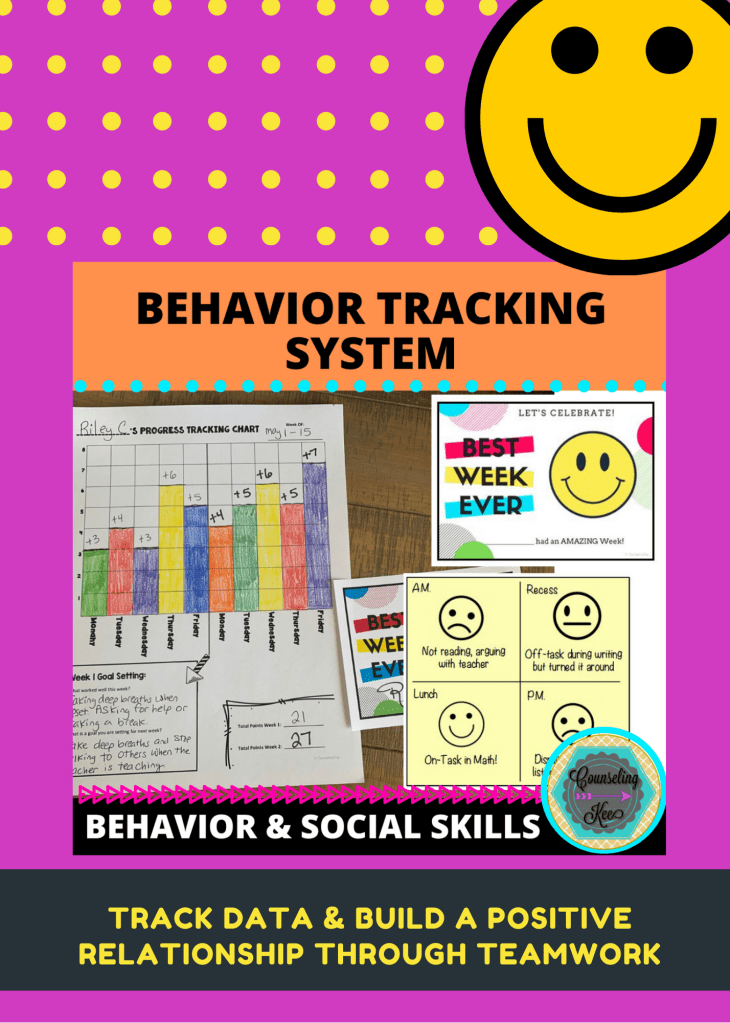
I created this Behavior Tracking System, and it is honestly so simple, you won’t believe it!
More so, you’ll be AMAZED at how successful it is with building those positive relationships and turning those difficult behaviors around. With a few minutes of your time a day, and a post-it, you will be able to coach your student into positive behavior success.
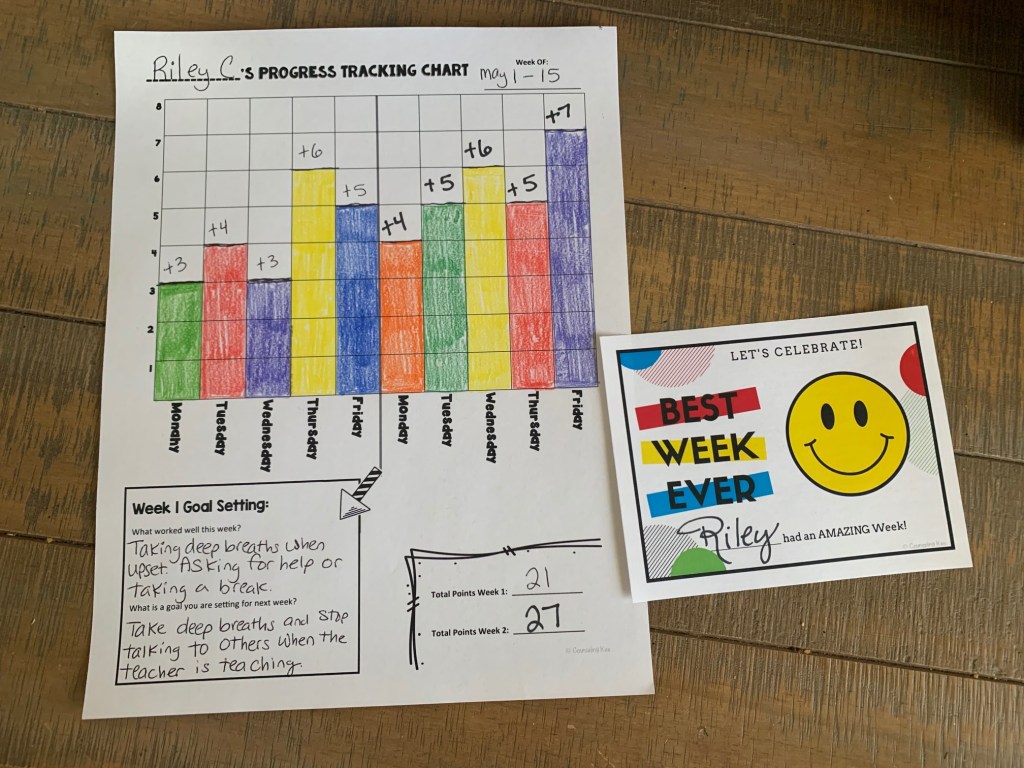
I am an absolute “data nerd”. So the Student Progress Tracking Chart is probably my most favorite part of this product. Students will meet with you to add up the points from their day, they will then track their day on their chart. Student Buy-In is HUGE! And in this situation, students are working with you, as a team, towards the same goal.
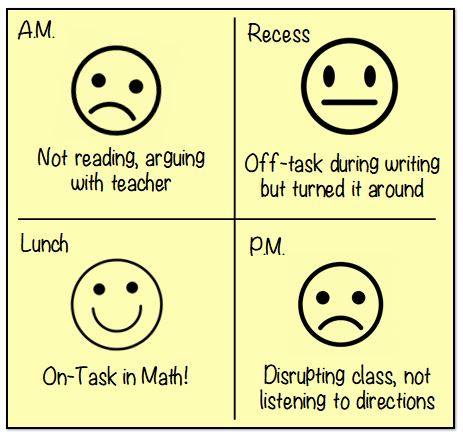
This all starts with a post-it!
Yup, you heard me right, a post-it! Nothing fancy, no major prep needed. Just pull out a post-it and label it with 4 times you can check in with your student per day. This example are the times that I usually choose. I know that sounds like a lot of time, or over-whelming, but trust me when I say it really isn’t! We are talking like a 1 minute conversation where you discuss with the student which face you are putting on the post-it and why. You then will set a goal with them for the next block, or will praise them if they were successful and earned a smiley face. That’s it! This should really just take a moment of your time.
At the end of the day, you will add up the points accumulated and you will chart those points on the student progress tracking chart. Again, this is the student buy-in part. Let THEM color the boxes on the chart. It makes them a part of the data collection and later, the analysis.
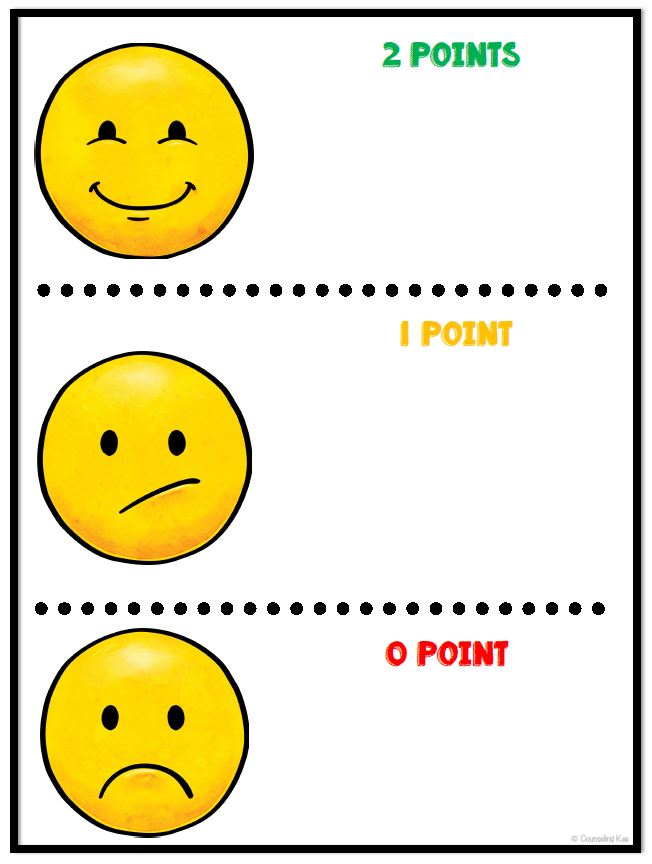
You and your student will work together to set-up the plan. (Don’t worry, if you aren’t up for starting from scratch, I have included a sample plan that will work fine for most.) However, if you are starting your plan – this sheet is editable using PowerPoint.
I sat down with my student and together we discussed what kind of behaviors might go with a smiley face. We listed things like being on task, or being ready to learn. We further discussed how those behaviors will help us to earn 2 points during that check-in time.
We continued out discussion to include what 1 point behaviors look like. The 1 point zone is where we are headed down the wrong path, but turn things around. Examples we listed here were: off-task but got back on-task when directed. Of course, 0 point behaviors are for students who just couldn’t turn things around during that time.
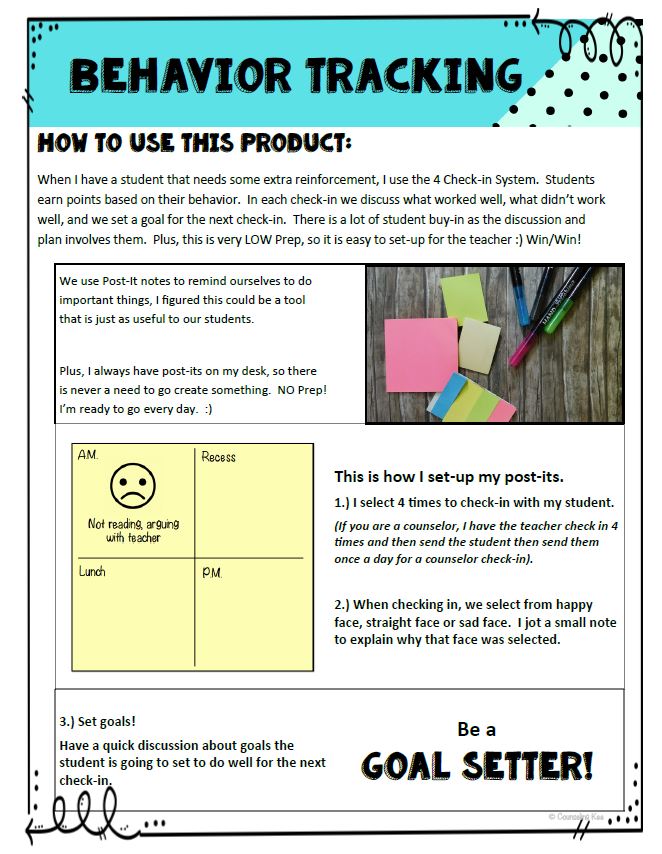
This product comes with detailed, step-by-step instructions to help you get started.
Thing thing I have learned the most about children is they value the time of an adult the absolute most. In the past when I have offered prize boxes and toys versus cards for being “teacher’s helper” or “lunch with the teacher”, more times than not, these things were selected. They just want your time! So again, I know that it seems like a lot to have to meet with a student 4 times a day… but in the end, I promise those minute meetings will seem fast, and the change in classroom climate will absolutely be worth it!
If you are interested in other products, please visit my store on Teacher Pay Teacher: Counseling Kee


 counselingkee.com